Companies are always looking for ways to attract customers through visual brand communication. From vinyl graphics on walls to backlit displays, the industry has continuously pushed for cleaner, more professional aesthetics. Nowadays, one of the most widely adopted advancements in visual merchandising is silicone edge graphics, also known as SEG, marking a trend in modern retail, trade shows, and corporate environments.
For sign shops evaluating where to grow next, dye sublimation SEG is not a niche format or an emerging experiment. It is an established production category with growing demand across multiple verticals, and the shops that add it now are positioning ahead of clients who are already looking for it.
What are SEG Graphics?
SEG graphics are high-resolution fabric prints typically produced using a wide format sublimation printer. The fabric is finished with a thin silicone strip sewn around the edges, which is then inserted into a lightweight aluminum frame, creating a display surface that is completely seamless, smooth, and free of the hardware or clips that traditional displays require.
The result is a graphic presentation that looks intentional and polished at any size. A small countertop unit and a 20-foot tradeshow signage or backwall follow the same logic; the SEG systems scale cleanly from compact retail applications to full room environments. The fabric used is a high-thread-count polyester specifically engineered for dye sublimation transfer, which means the printed color bonds permanently to the fibers. Dye sublimation SEG produced this way deliver vibrancy and detail that hold up in backlit configurations and through repeated use.
Top 3 Reasons Silicone Edge Graphics Are Trending in 2026
1. High-End Aesthetics that Reflect Modern Branding
Frameless, wrinkle-free, and glare-free, dye sublimation SEG output delivers edge-to-edge imagery with no visible hardware and clean sight lines from every angle.
2. A More Sustainable and Cost-Effective Display Investment
Lightweight fabric cuts shipping costs, aluminum frames are reused across campaigns, and clients spend only on print refreshes rather than replacing entire display systems.
3. Versatility and Installation that Works at Any Scale
SEG systems scale from countertop to full backwall without changing the production logic. Clients swap panels without professional tools, and LED backlighting turns the same system into a completely different visual experience.
What Does This Mean for Your Production Offering?
Each of these advantages is something your clients are already asking for; they just may not know SEG is the answer yet. Understanding what makes the format work gives your shop the ability to recommend it confidently, spec it correctly, and produce it at the quality level the application demands.
SEG vs. Traditional Tension Displays
Both tension fabric and SEG dye sub displays share the same foundation, dye sublimation printing, and lightweight aluminum frames built for repeated use. Where they differ is in how the fabric attaches to the frame and what that means for the finished result.
Traditional Tension Displays
Tension fabric works like a pillowcase pulled over the frame structure. It is fast to install, easy to travel with, and practical for teams managing their own setup across multiple events. At standard booth sizes, it performs well, but at larger formats, a slight waviness in the graphic surface can appear where the fabric stretches unevenly.
SEG
SEG takes a more precise approach. The silicone strip sewn into the fabric edge presses into a routed channel on the frame, pulling the graphic drum-tight from every side. The result is a flatter, frameless surface with no visible hardware and no rippling, a difference that becomes especially noticeable on displays ten feet and wider, or in backlit configurations where uneven tension would show immediately under the light.
The Right Dye Sub Printer for SEG Production
Producing SEG fabric graphics starts with having the right equipment for the job. A wide format sublimation printer is the core production tool, one capable of printing to the widths most SEG frames require, with consistent color output across the full run.
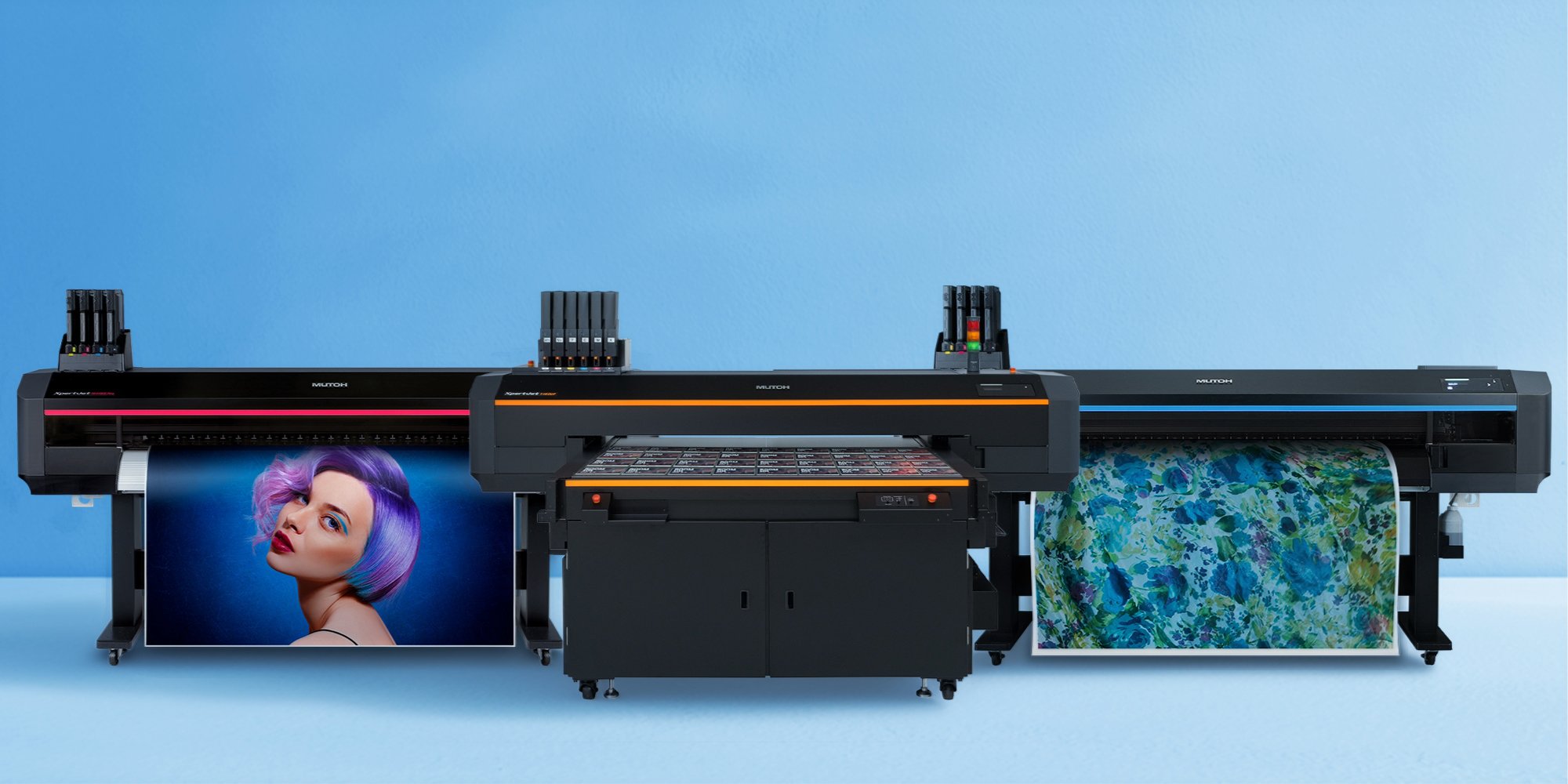
MUTOH ValueJet 2638 WX and XpertJet 1642WR Pro are a practical choice for shops entering this space, offering the print width and color consistency that professional SEG production demands.
Color accuracy matters just as much as print width. Building color profiles matched to your specific fabric and application type, whether front-lit or backlit, is what allows your shop to deliver brand-approved results reliably. A stable dye sublimation ink system with a wide color gamut makes that consistency achievable job after job, without recalibrating from scratch each time.
For shops already running wide format sublimation printers, adding sublimation capability is a practical next step, but it requires patience in the early stages. The fabric printing fits within your existing workflow, but the silicone gasket finishing and aluminum frame sourcing can take some time to figure out. Expect some trial and error as you find the right finishing partner and frame supplier. Starting by outsourcing both keeps the entry point manageable, and as your process matures, bringing gasket application in-house becomes a realistic option.
SEG Across Industries: Where the Demand Is Coming From
Trade Shows and Events
Tradeshows are where SEG systems made their name, and demand has only grown from there. Exhibitors building island booths, backlit backwalls, and multi-panel environments consistently specify SEG because the format holds up under the pressure of tight installation windows, repeated setup and teardown, and high-visibility brand exposure. For print shops, tradeshow clients are also among the most reliable, a company exhibiting several times a year needs updated SEG graphics for each event, creating recurring production work tied to a predictable calendar.
Retail Environments
Retail is one of the fastest-growing segments for SEG adoption. Window displays, interior feature walls, and point-of-sale areas benefit from the seamless, high-resolution finish that fabric graphics deliver at scale. Retail brands refresh their visuals seasonally, which means the frame stays and only the printed fabric changes, a built-in repeat purchase cycle for shops producing the work.
Commercial Interiors
Corporate offices, hotel lobbies, airports, and healthcare facilities are increasingly specifying fabric graphics for branding, wayfinding, and environmental design. These are not temporary installations; they are part of the architecture of a space, which means quality and consistency matter as much as visual impact. Dye sublimation SEG print holds color accurately over time and under varied lighting conditions, making it well-suited for permanent or semi-permanent interior applications.
Home Décor and Art
An emerging and often overlooked segment is residential. Interior designers and art buyers are specifying large-format fabric prints for feature walls, custom artwork, and decorative panels. The soft finish, lack of glare, and edge-to-edge color that define SEG dye sub output translate naturally into home environments where rigid prints would feel out of place.
Your Shop's Next Growth Move Is Already in Demand
The clients who need dye sublimation SEG are not a future audience; they are already in your market, currently sourcing this work from someone else. Adding SEG production to your shop means capturing that demand with the wide-format dye sublimation capability you are already building toward. Start by requesting a sample to evaluate output quality, or connect with an authorized MUTOH dealer to find the right sublimation printer for the work you want to bring in-house.