Buying equipment based only on the jobs you produce today can make sense, until your customers start asking for something your printer cannot produce. A wide format printer should not only solve your current production needs; it should give your business room to explore new applications, substrates, and revenue opportunities.
The right equipment strategy can help you expand your service without immediately needing another printer every time a new opportunity appears. The key is to look beyond a printer's primary application and consider what else it can produce.
Think Beyond Your Current Applications
A print shop may begin with a clear specialty: signs, vehicle graphics, decals, packaging prototypes, promotional products, or textiles. But customer demand rarely stays inside one category.
That is why equipment selection should start with a broader question: What could this printer help me sell next?
Look at Substrate Flexibility
Media compatibility is one of the most important factors when evaluating future opportunities. An eco solvent printer, for example, can support traditional graphics applications such as stickers, decals, banners, signage, and vehicle graphics.
Some printers can take that versatility a step further by combining printing and contour cutting in one workflow. The XpertJet C641SR Pro can help shops produce decals, stickers, labels, and other graphics without requiring separate equipment.
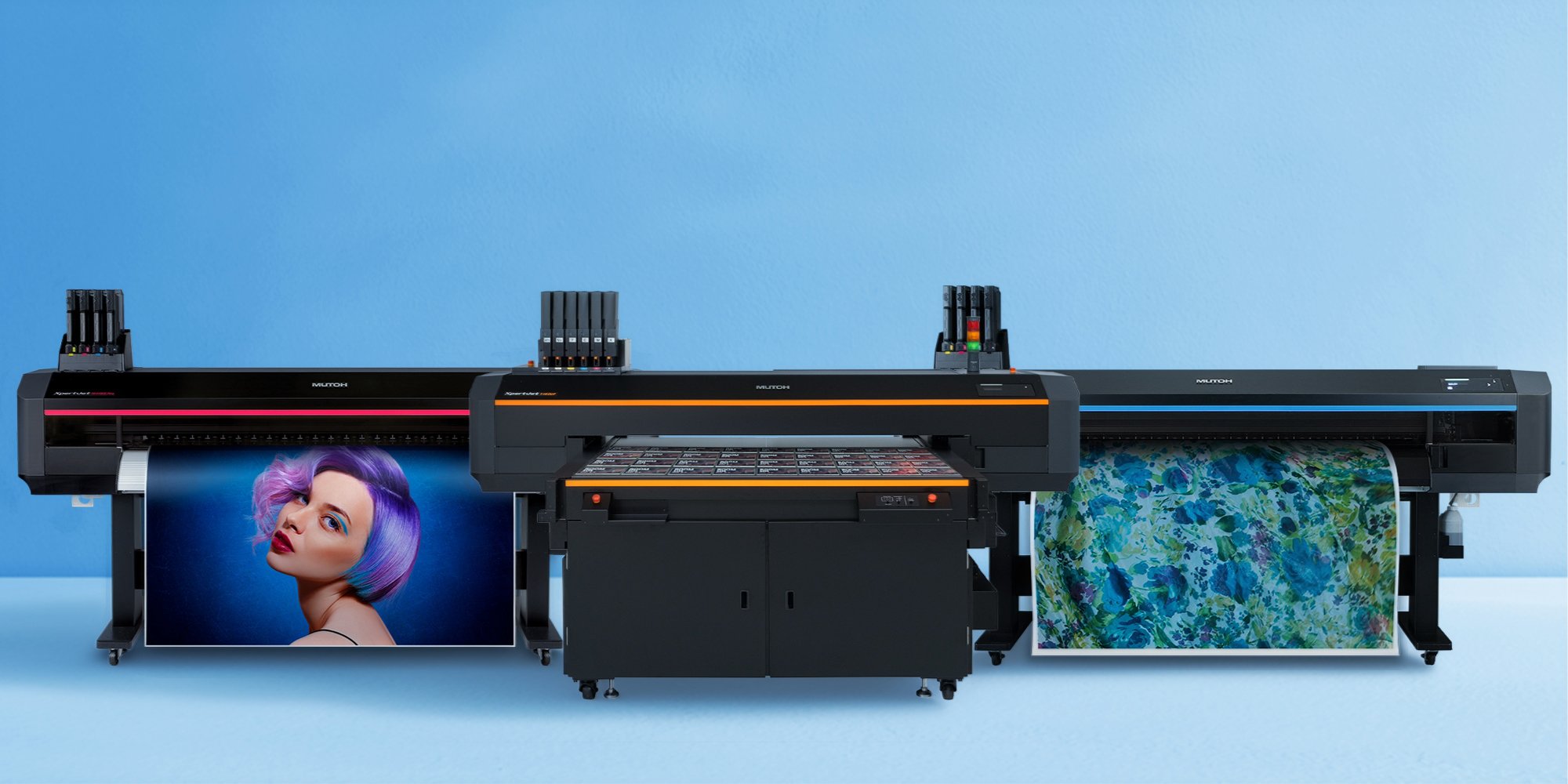
For shops focused on vehicle graphics or wraps, the XpertJet 1641SR Pro II and XpertJet 1681SR Pro are known as “The Wrappers Choice,” but their capabilities extend beyond vehicle graphics. They can also produce applications such as wall murals, floor graphics and banners giving print shops the flexibility to serve multiple markets with the same equipment. The XPJ-1641SR Pro II uses a four-color configuration, while the XPJ-1681SR Pro uses an eight-color configuration for smoother gradients, deeper reds, and natural skin tones.
Explore the eco-solvent printer lineup to compare equipment built for graphics, wraps, soft signage, labels, and more roll jobs.
Consider What the Ink Enables
The ink technology can be just as important as the printer itself.
For example, MUTOH MP31 ink opens opportunities beyond conventional graphics because it is designed for a broad range of substrates used for packaging prototypes and other specialty applications. The ValueJet 628MP and ValueJet 1628MH can be used for packaging mockups on materials including films, paperboard, corrugated, and other substrates.
That makes these printers worth considering for businesses interested in packaging prototyping. A shop that starts with mockups can grow into short-run packaging, structural samples, promotional packaging, and other specialty work as customer demand develops.
The VJ-1628MH adds hybrid capability, allowing shops to work with both roll and rigid materials, while the VJ-628MP is designed for roll media. This distinction matters when planning not only what you print today, but what formats you may want to add later.
Match Technology to Your Growth Path
Not every application requires the same printing technology. Instead of searching for one printer that does everything, think about which technology gives your business the strongest path into additional markets.
UV Printing Opens Direct-to-Object Opportunities
A UV flatbed printer changes what a shop can sell, because the ink cures on the surface and prints directly onto many rigid and specialty objects.
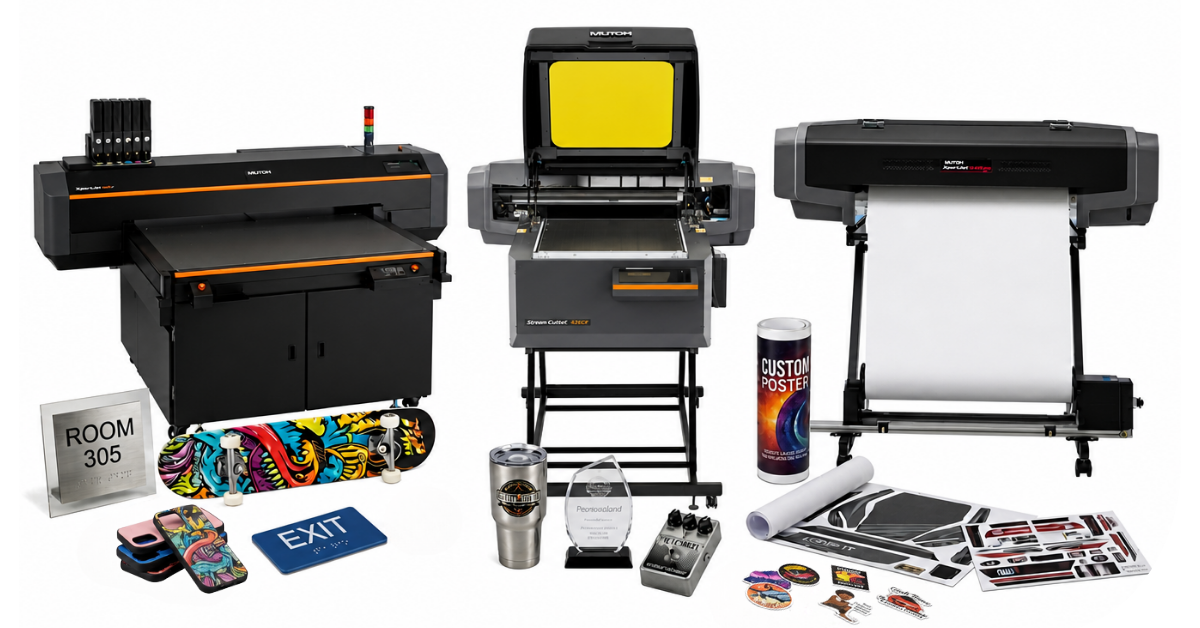
Depending on model and configuration, MUTOH UV printers such as the XpertJet 1462UF and XpertJet 661UF cover signage, personalization, ADA-compliant signs, raised tactile effects, and varnish. Lenticular printing is available on the XPJ-661UF.
Optional accessories can also expand the application range. For example, rotary options can make cylindrical objects part of the production mix.
The ValueJet 1638UH Mark II adds another dimension with hybrid capability for both roll and rigid media. For shops interested in UV applications, the UV and MP printer lineup provides options across different production needs.
Explore Specialty Applications Before You Need Them
Future growth does not always mean moving into a completely different industry. It can mean adding a higher-value service to an existing customer relationship.
A sign shop could add braille signage; a promotional-products provider could add personalization; a graphics business could offer specialty direct-to-object printing, and a packaging company could add retail displays and shelf graphics.
UV technology can help bridge those opportunities because one platform covers several categories of work rather than being limited to one finished product.
The HydrAton 1642 demonstrates another direction: water-based UV printing for applications where indoor-environment considerations are important. This gives businesses another technology option to evaluate when developing a broader equipment strategy.
Do Not Overlook Dye-Sublimation
Businesses serving apparel, textiles, décor, and other fabric-based markets should also consider dye sublimation printers as part of a long-term equipment plan.
Dye-sublimation technology can support fabric graphics and other transfer applications, allowing a shop to expand beyond rigid signage and adhesive graphics. The available equipment ranges in size and production capacity, so print width should be considered alongside the applications a business expects to pursue.
The dye sublimation printer lineup can help businesses evaluate options based on their current production needs and potential future applications.
Build Around Applications, Not Just Printers
The goal is not to buy the biggest or most versatile wide format printer simply because it can perform more tasks. More capability is valuable only when it aligns with a realistic business opportunity.
Before investing, consider these questions:
What do customers already request that you outsource?
Those jobs may reveal the clearest opportunities for bringing additional revenue in-house.
Which applications are adjacent to your current business?
A vehicle graphics shop may naturally expand into general signage and decals. A sign shop may move into ADA or direct-to-object work. A packaging designer may add physical mockups and short-run samples.
What substrates do you want to offer?
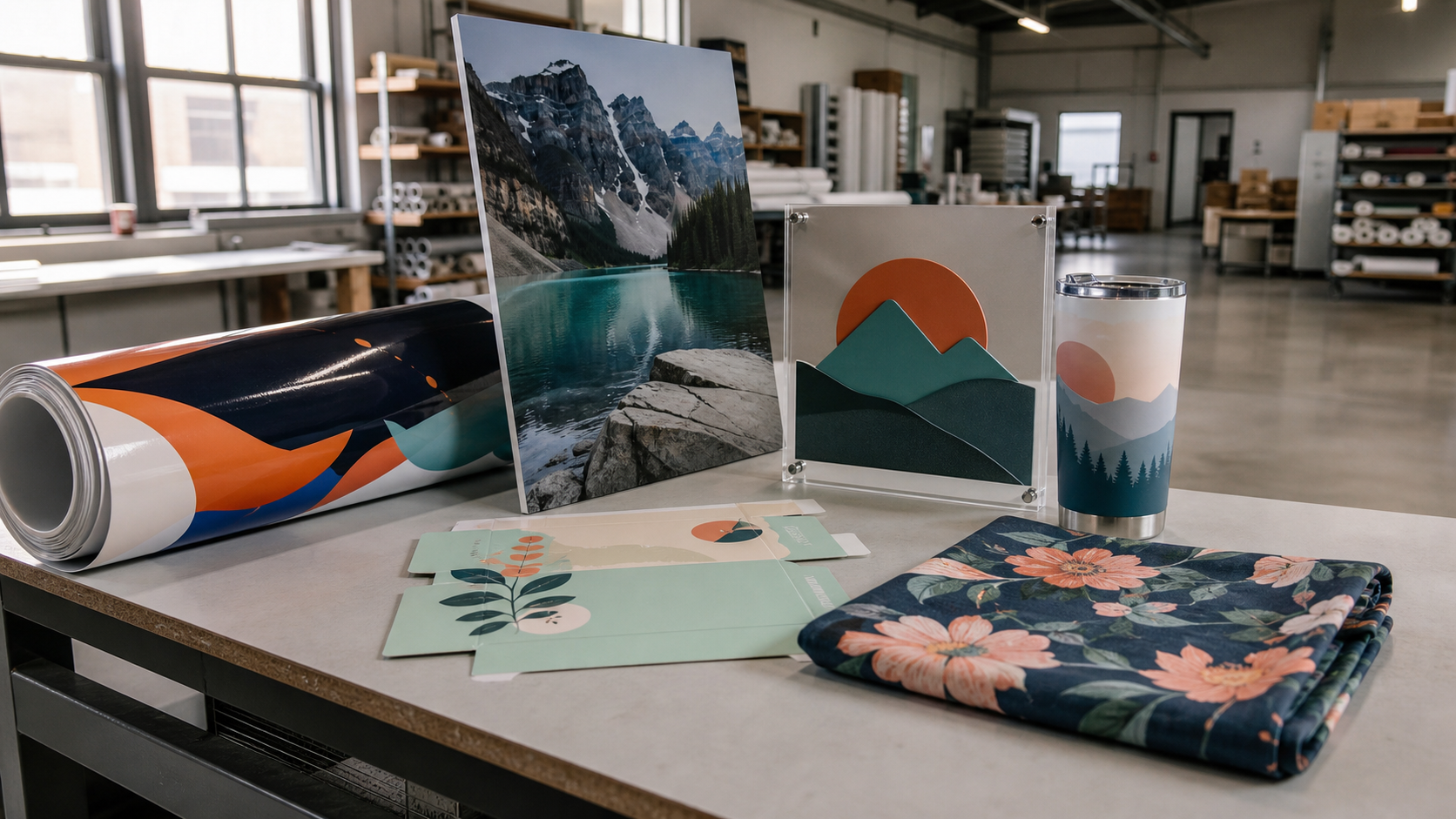
Think beyond the media you regularly use. Rigid boards, corrugated materials, films, specialty substrates, textiles, and objects such as bottles or awards each open a different door.
What finishing equipment will you need?
Printing is only one part of production. Cutters, rotary accessories, presses, and other finishing equipment can influence which applications are practical.
Can the equipment support your next stage of growth?
A wide format printer that works for today's workload but limits tomorrow's applications can become a costly limitation.
Reduce Buyer's Remorse by Planning Ahead
Equipment is a significant investment, and the purchase price is only the starting point. Adding an application usually means adding more than a printer: finishing equipment, a second substrate inventory, floor space, ink consumption, and operator hours all decide whether the new work is profitable or simply busy.
Ask what a full job costs to produce before you ask what the machine costs to buy. Ink volume for a typical run, daily maintenance time, and how quickly parts arrive when something fails all show up in your cost per job.
The goal is not to find a printer that does everything. It is to choose equipment that meets today's needs while leaving practical room for tomorrow's opportunities.
Think About the Next Customer, Not Just the Next Job
A smart equipment strategy asks what your business could become, not just what it produces today.
When evaluating a wide format printer, consider application range, substrate flexibility, ink capabilities, finishing requirements, and the markets you may want to enter next. This approach can help you choose equipment that works for today's production while giving you more options as your service offering develops.
Whether your next opportunity is vehicle graphics, signage, braille, personalization, packaging, specialty UV printing, or textile production, choosing equipment with future applications in mind can help you get more value from your investment.
Ready to explore what different technologies can produce? Request a sample to see the possibilities for your applications, or find your nearest dealer to discuss which equipment fits your production goals.